Smoke detectors have saved lives for decades
In a typical structure fire, you have a few minutes to deploy a fire extinguisher or evacuate after a smoke alarm goes off. That's because typical fires start by smoking for a few minutes before they progress to actual flames.
Unfortunately, smoke detectors are ineffective in many micromobility battery fires
Micromobility battery fires from devices like e-bikes and e-scooters leave virtually no time to react. Thermal runaway can lead to sudden explosions, and the extreme heat from battery fires means flames can engulf a room in seconds.
Thermal runaway is a rapid, uncontrollable chain reaction that can result in spontaneous combustion, even when devices aren’t plugged in.
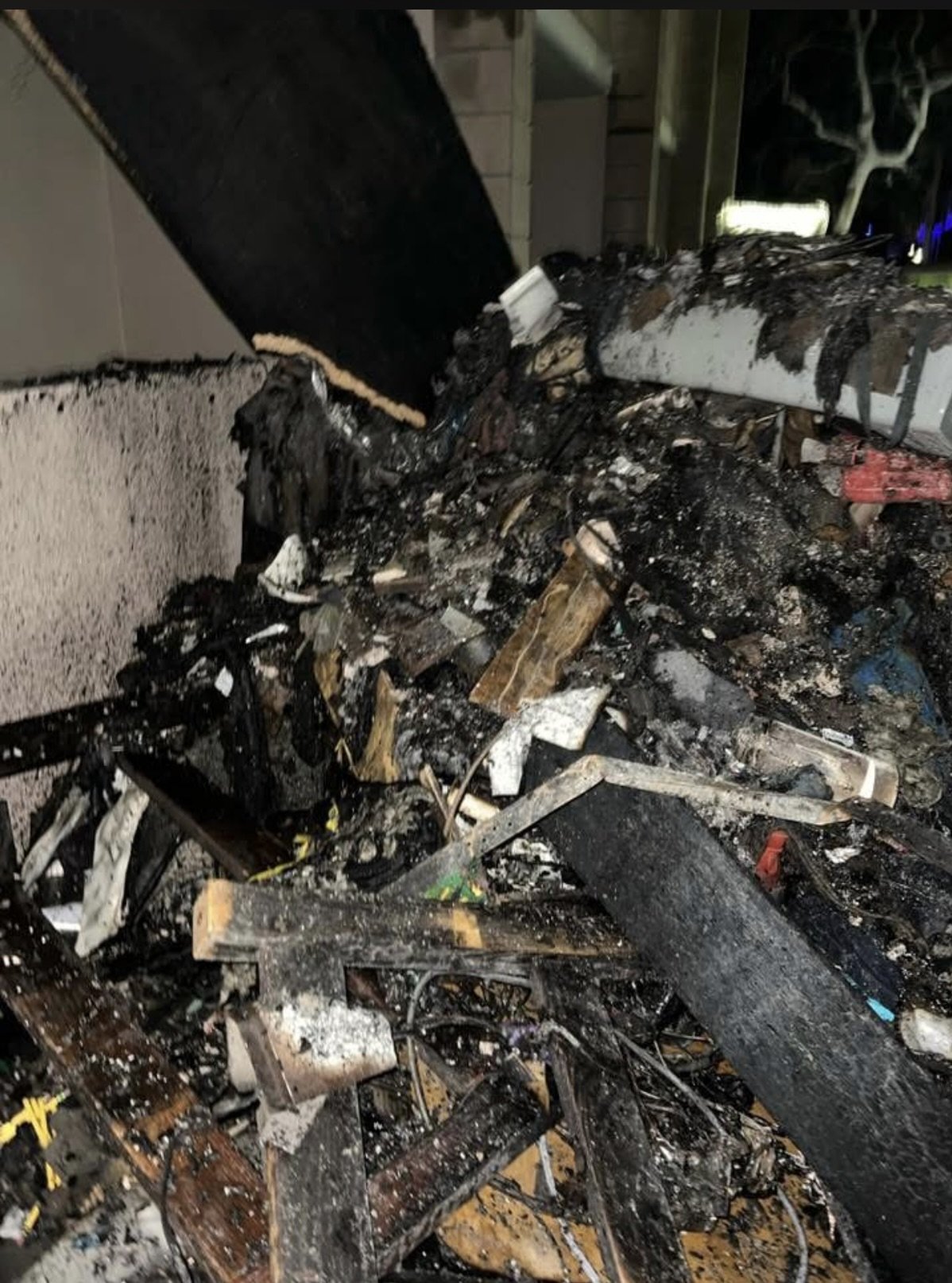
This was a dorm room
You're looking at the aftermath of an e-skateboard battery that experienced sudden thermal runaway
One of our followers sent us this image from a fire that occurred in the last few weeks
You have my attention. How can I protect my community?
REMINDER: A ban alone probably won't eliminate micromobility batteries from your buildings. Without education, viable alternatives, and strong enforcement, bans can increase risk. That's because they lead people to obscure batteries in closets and under beds where there's a lot of combustible material that adds fuel to a fire.
There's an emerging category of products that are designed to spot early signs of battery failure and alert you before thermal runaway sets in
The core technologies have been around for years, but have been mainly used in industrial or automotive applications. A new wave of companies is adapting these technologies, creating affordable, easy-to-deploy products that can help protect buildings from battery fires.
So what's out there?
Inside the battery (smart batteries)
Every lithium-ion battery has a built-in battery management system (BMS) that regulates basic functions like charging and temperature. A new wave of BMS takes this further — they're tuned to detect early signs of failure and report detailed health data back to the user. This data can also feed into centralized dashboards giving property managers the real-time status of every compatible battery on site.
On the battery (smart tags)
Smart tags attach to the outside of batteries, track temperature, and link each device to its owner — building a registry of approved devices on site. Building managers can see what batteries are on-site and which batteries are running hot.
In the room (thermal runaway detectors)
Like a smoke detector, but built to monitor batteries. These devices sit in a room near batteries and monitor temperature, humidity, and the gases batteries release in the early stages of a thermal event — like carbon dioxide, hydrogen, and volatile organic compounds (VOCs). If gas levels get too high, they sound an alarm and send a mobile alert.
At the outlet (smart charging & outlet controls)
Smart outlets and timer plugs can automatically cut power after a set period to prevent overcharging. Programmable chargers can cap charge levels, and electrical fault monitors can detect dangerous electrical activity from faulty chargers or overloaded circuits before a fire starts.
Why we're excited about this category
Over the past several months, we've spoken with hundreds of folks at higher-ed and corporate campuses, housing organizations, commercial properties, transit agencies, and in government.
You have a lot in common
You know micromobility battery fires are cause for concern, but you're busy with competing priorities, understaffed, and budget constrained. You're excited to learn more about this issue, but taking the actions that would meaningfully mitigate your risk can feel too challenging.
Early detection and warning solutions aren't a panacea. But they're a lot simpler & more affordable than many other solutions out there.
They're especially promising when it comes to life safety, as they can give critical early warning signs when there's still time to safely evacuate.